14 juli 2026
HVEG Accessories Group restructures operations as Belt Fashion Eindhoven closes factory
EINDHOVEN – After careful consideration and in light of current economic conditions, it has been dec...
EINDHOVEN – After careful consideration and in light of current economic conditions, it has been decided to discontinue the in-house production activities of Belt Fashion Eindhoven B.V. This strategic step marks the end of a significant chapter of over 50 years of domestic manufacturing, while ensuring the wider organisation remains healthy, agile, and prepared for […]
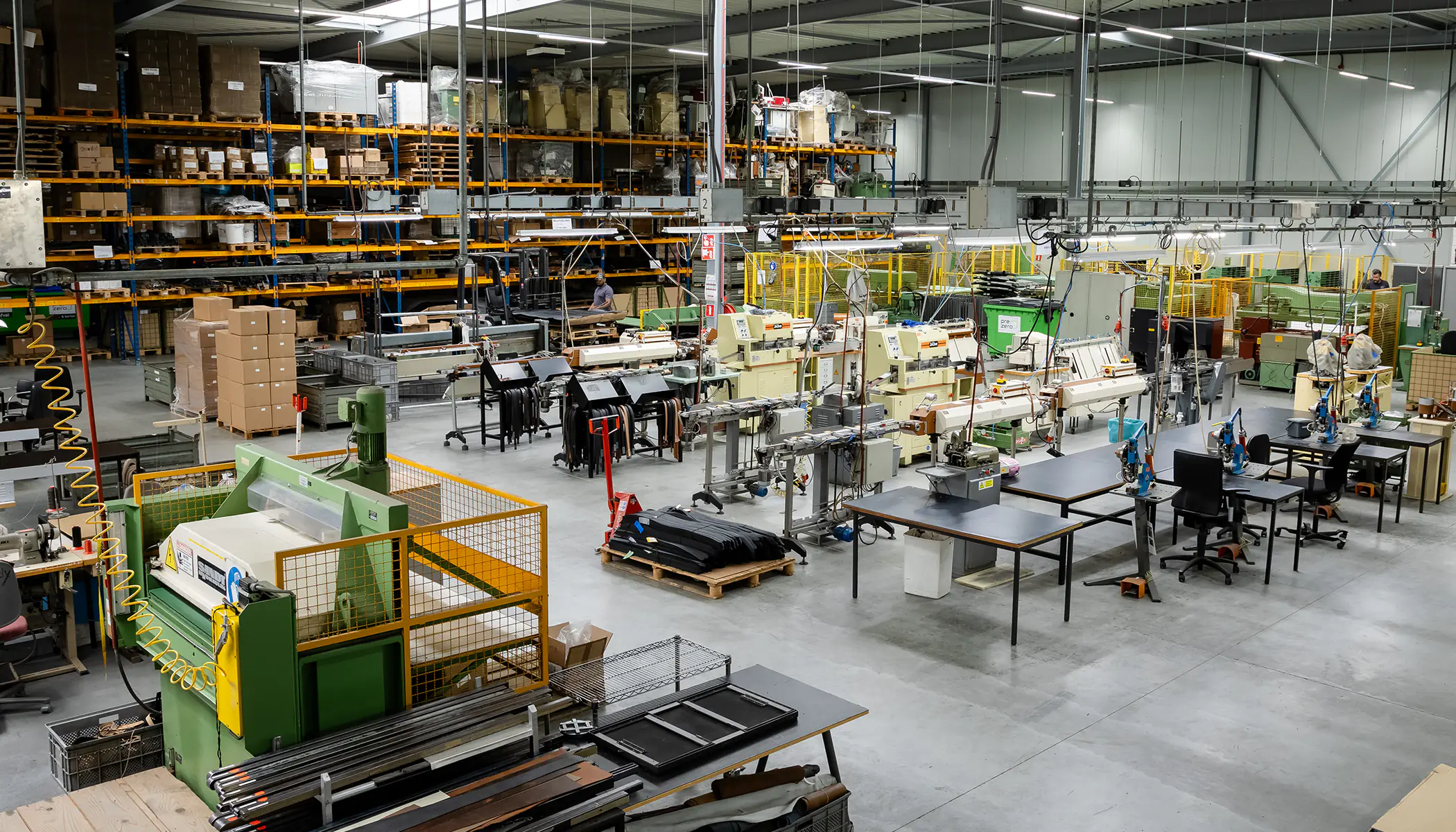
EINDHOVEN – After careful consideration and in light of current economic conditions, it has been decided to discontinue the in-house production activities of Belt Fashion Eindhoven B.V. This strategic step marks the end of a significant chapter of over 50 years of domestic manufacturing, while ensuring the wider organisation remains healthy, agile, and prepared for the future.
Five decades of heritage and craftsmanship
The history of Belt Fashion dates back to 1976, when the company started in Eindhoven with a clear mission: creating belts crafted with care, skill, and distinct attention to detail. To achieve production at scale while maintaining consistent quality, the factory operated from the very beginning with custom-built machinery specifically developed for the company—equipment that remains unique in the industry today.
Over the past 50 years, this specialised factory grew into a trusted manufacturing partner for fashion retailers and brands across Europe and beyond. The production process traditionally covered the entire trajectory from initial design sketch to the finished product. Materials, including leathers and buckles, were sourced from established European suppliers with a continuous focus on durability, quality, and tracking responsible production and industry standards.
Throughout these five decades, Belt Fashion’s design timeline mirrored the evolution of European fashion:
• The 1970s: Wide suede belts with strong western influences.
• The 1980s: Bold statement belts with large buckles and decorative details.
• The 1990s: A shift towards minimalism, cleaner designs, and neutral colours.
• The 2000s: The comeback of statement pieces worn lower on the hips.
• Recent years: A return of classic influences, including braided and minimalist styles.
In 2014, the company further optimised its operations by expanding into leather lifestyle accessories. By utilising leftover leather from the primary belt manufacturing process, Belt Fashion introduced a broader product offering—including keychains, dog leashes, aprons, and card holders—making better, more responsible use of raw materials.
HVEG Accessories Group wishes to express its sincere thanks and appreciation to all the employees in Eindhoven who contributed with dedication, craftsmanship, and commitment over the years, shaping the company into what it was and creating many wonderful shared memories.
Transition towards international growth and sourcing
The decision to cease production activities is a necessary response to current economic pressures, ensuring the agility of the corporate structure. However, this adjustment applies strictly to the physical in-house manufacturing operations of Belt Fashion Eindhoven B.V.
The core commercial and operational functions of HVEG Accessories Group B.V. will continue completely unchanged. Moving forward, the organisation will focus entirely on its development as a strong international partner in sourcing, product development, and supply chain management.
All primary business operations remain fully functional at full capacity, including:
• International purchasing and responsible sourcing networks.
• In-house design and innovative product development.
• Quality control, material compliance, and industry certifications.
• Logistics, supply chain management, and delivery operations.
By aligning its resources with these international business activities, HVEG Accessories Group B.V. continues to support its European retail partners with unchanged continuity and looks to the future with absolute confidence.
For further information, please contact Lydia de Fluiter, Executive Assistant at HVEG Group, at lydia.de.fluiter@hveggroup.com